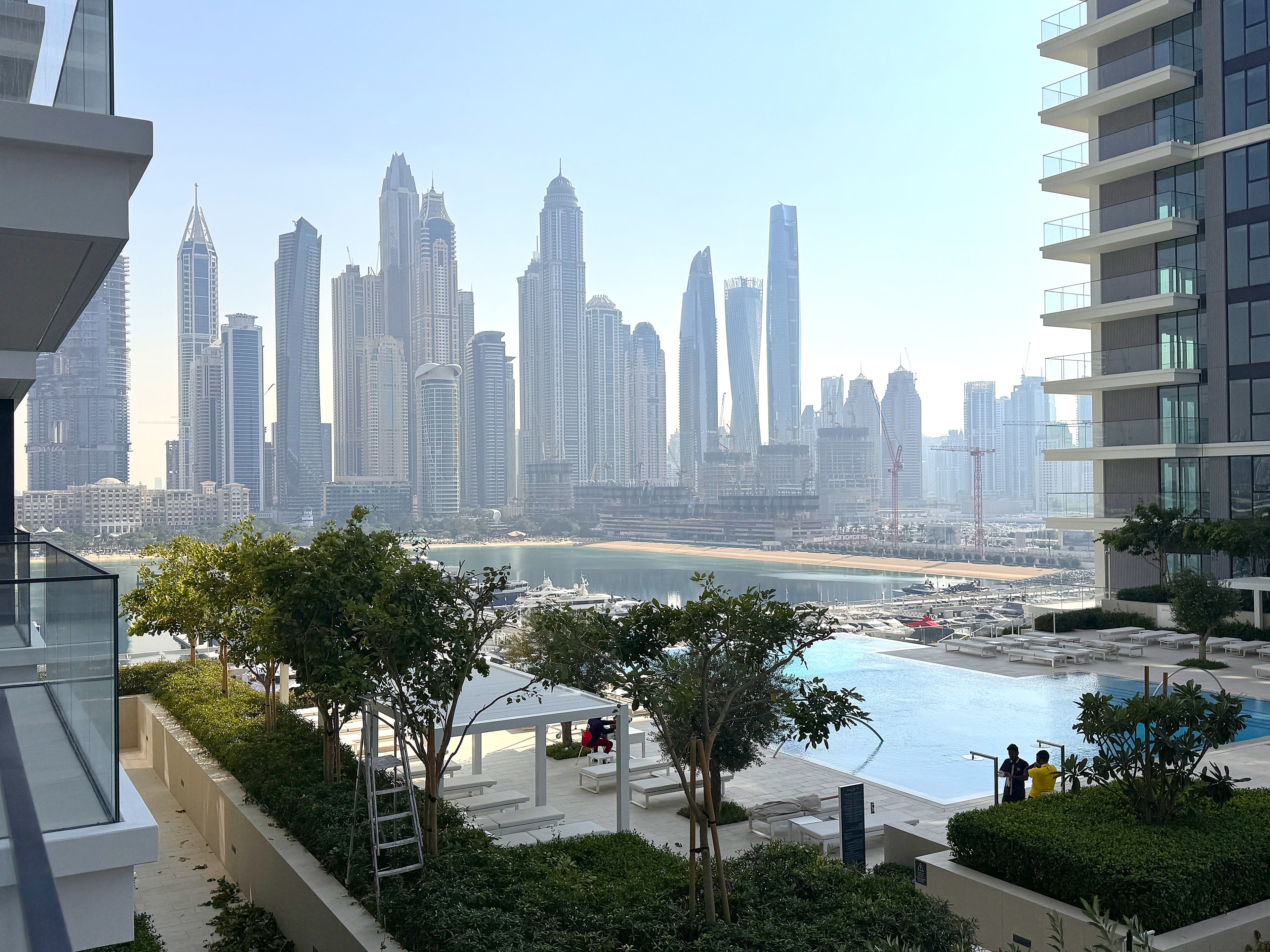
Most people visiting Dubai for the first time are captivated by Palm Jumeirah. The iconic palm-shaped island sitting in the Arabian Gulf has become one of the most recognisable real estate addresses on the planet. But while Palm Jumeirah grabs the headlines, a new waterfront development is quietly emerging along Dubai's northern coastline, and it is attracting serious attention from investors who understand what it means to get into a market before it fully matures.
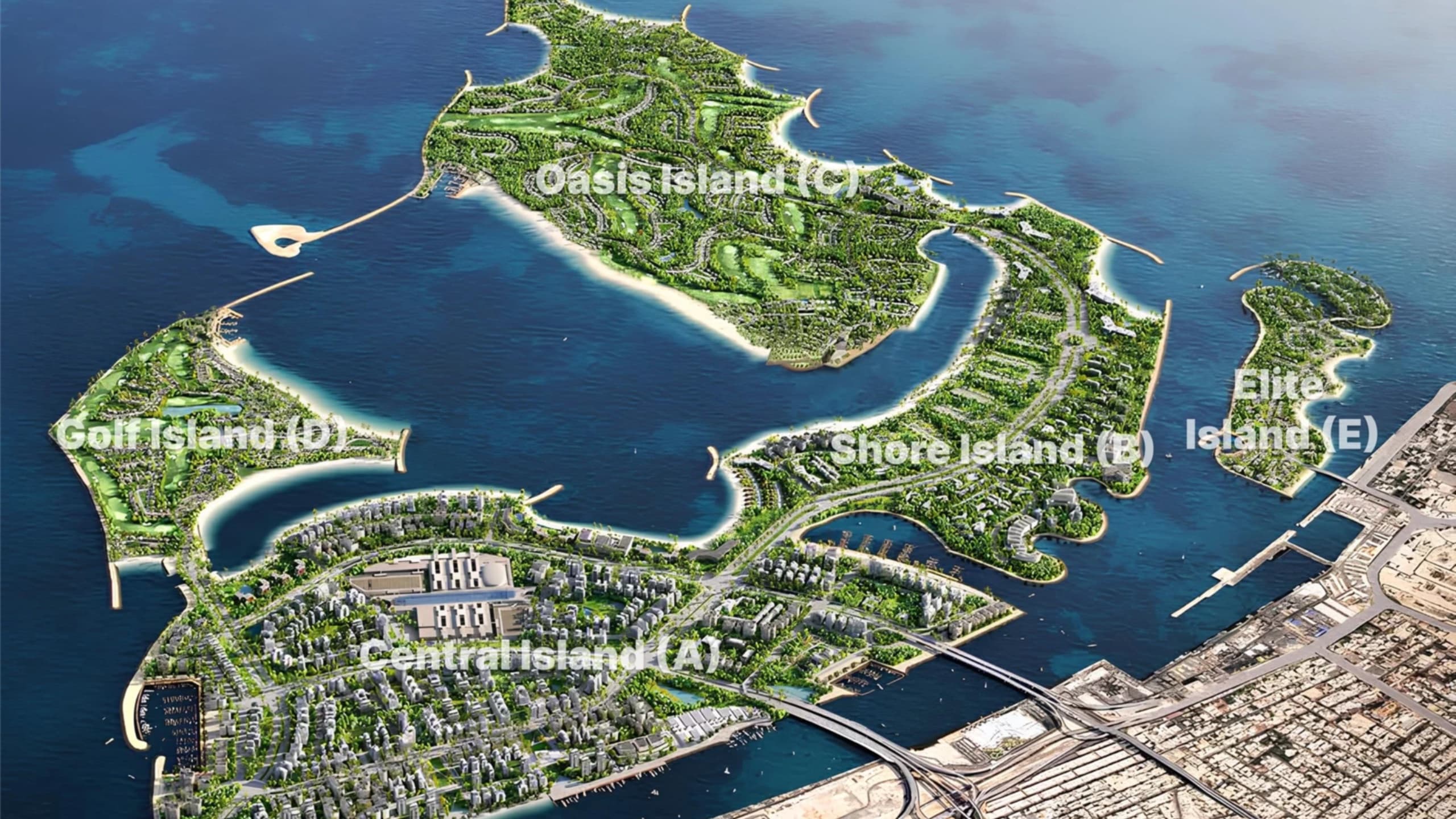
Dubai Islands is a 17 square kilometre masterplan developed by Nakheel, the same company that built Palm Jumeirah. It spans five artificial islands just off the coast of Deira and is designed to become one of the world's premier waterfront destinations for residential living, tourism, and investment. For European investors looking at Dubai in 2026, it represents one of the most compelling entry points in the city's entire real estate market.
This guide covers everything you need to know about Dubai Islands, including what it is, where it is, how it is structured, what properties are available, what prices look like, and what the investment case actually is.
What Is Dubai Islands?
Dubai Islands was originally known as Deira Islands and was first announced by Nakheel in 2004 as part of the broader Palm Islands programme. After a long development period, the project was rebranded as Dubai Islands in August 2022 and aligned with Dubai's 2040 Urban Master Plan. The rebranding came with a renewed commitment from Nakheel and a significant acceleration of construction activity.
The development spans 17 square kilometres across five interconnected islands off the coast of Deira, in the northeastern part of Dubai. When fully completed, it will be home to more than 390,000 residents and workers, over 80 luxury hotels, 20 kilometres of pristine beachfront, two premium golf courses, multiple marinas, and a full suite of retail, dining, and cultural facilities.
It is worth understanding the scale of this ambition. Dubai Islands will effectively double Dubai's coastline, adding over 20 kilometres of new beachfront to a city that has built its global identity on waterfront luxury. Nakheel has invested AED 7.5 billion in infrastructure alone, and the full development is expected to reach completion by 2030.
Where Is Dubai Islands Located?
Dubai Islands sits off the coast of Deira, in the northeastern part of the city. This location is often misunderstood by international buyers who associate prime Dubai real estate exclusively with the southern corridor around Downtown, Dubai Marina, and Palm Jumeirah.
Deira is actually one of the oldest and most established parts of Dubai. It is where the city's original trading history began, and it sits directly adjacent to Dubai International Airport, one of the world's busiest aviation hubs. From Dubai Islands, residents are within a short drive of DIFC, Dubai Creek Harbour, and the broader city centre.
The islands are currently connected to Deira via an existing road from Abu Hail Road. A major new bridge from Abu Baker Al Siddique Road is currently under construction at approximately 50% completion, which will significantly improve access. Once the full road network is in place, each of the five islands will be connected to one another via individual road bridges.
For European investors managing a property remotely, the proximity to Dubai International Airport is a practical advantage that is easy to overlook. Flights from major European cities land at Dubai International, which is minutes from Dubai Islands. Arrivals visiting their property, managing a handover, or conducting due diligence on site will find the location genuinely convenient.
The Five Islands: What Each One Offers
Dubai Islands is not a single development. It is a collection of five distinct islands, each with its own character, purpose, and investment profile.
Central Island is the heart of the development. It is the most commercially active island, housing the main retail, hospitality, and residential projects. The Centara Mirage Beach Resort, one of the first hotels to open on the islands, sits here, along with the Deira Islands Night Souk, which claims to be the world's largest night market with 5,300 shops and nearly 100 waterfront cafes and restaurants. Central Island is expected to be the most mature part of the development in the near term and is where most of the active off-plan residential launches are currently concentrated.
Shore Island is positioned as the premium residential island, focused on beachfront living, luxury villas, and high-end apartment developments. This is where buyers seeking a quieter, more residential atmosphere will find the most relevant inventory.
Golf Island is centred around two championship golf courses overlooking the Arabian Gulf and the Dubai skyline. Properties here will command premium prices due to the golf course frontage and the views that come with it, and they will appeal to a specific profile of buyer who values that lifestyle.
Marina Island is designed around Nakheel Marinas Dubai Islands, a full-service marina that can accommodate up to 13 superyachts simultaneously, with 248 wet berths for vessels up to 47 metres. The marina infrastructure makes this island particularly attractive for buyers who are drawn to a nautical lifestyle.
Elite Island is the most premium and exclusive of the five, positioned as an ultra-luxury address targeting high-net-worth buyers. The inventory here will be limited and the price point will be the highest across the entire development.
Dubai Islands and the 2040 Urban Master Plan
One of the most important things to understand about Dubai Islands as an investment is how it fits into the Dubai 2040 Urban Master Plan, the government's long-term blueprint for the city's development over the next two decades.
The 2040 Urban Master Plan designates Dubai Islands as one of five major urban growth centres that will receive significant infrastructure investment, population growth, and commercial development through to 2040 and beyond. The plan calls for doubling Dubai's beach areas, expanding green and recreational spaces, and building out world-class tourism infrastructure. Dubai Islands is explicitly designed to deliver on all three of those objectives.
This alignment matters for investors because it means the government's long-term investment priorities are directly supporting the area's growth. Infrastructure spending, transportation improvements, hotel developments, and cultural projects are all being directed to Dubai Islands as part of a coordinated plan that will take the development from its current early stages to a fully mature waterfront community over the next decade.
Investors who entered Palm Jumeirah in its early phases made returns that are almost impossible to replicate today because the area has fully matured. Dubai Islands offers a comparable opportunity, but at a much earlier stage of development and at significantly lower price points.
Property Prices and Entry Points
One of the most compelling aspects of Dubai Islands for European investors is the current price point relative to comparable waterfront addresses in Dubai.
As of early 2026, properties on Dubai Islands are trading at approximately AED 2,317 per square foot on average. Compare that to Palm Jumeirah at AED 4,980 per square foot, Bluewaters Island at AED 3,781 per square foot, or Jumeirah Bay at AED 11,688 per square foot, and the value proposition becomes immediately clear. Dubai Islands offers waterfront living at roughly 55% less per square foot than Palm Jumeirah.
For European investors thinking in euros, off-plan apartments on Dubai Islands start from approximately AED 1,300,000 to AED 1,400,000 for well-positioned one and two-bedroom units, which translates to roughly €325,000 to €350,000 at current exchange rates. Larger apartments and penthouse units in premium projects start from AED 2,600,000 and above.
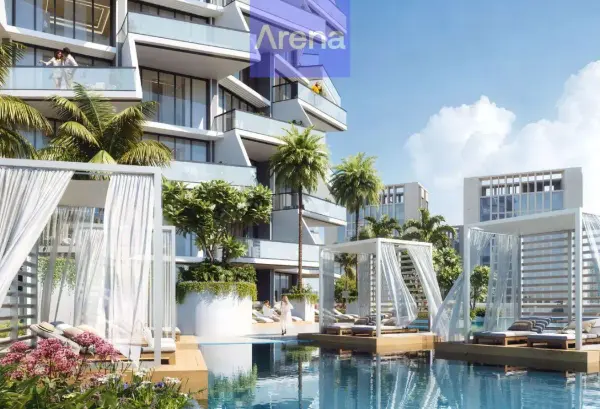
Active projects currently available on Dubai Islands include a wide range of price points and payment structures. Beach Residences by Nakheel starts from AED 2.6 million with an 80/20 payment plan and targets handover in Q4 2026. Rixos Dubai Islands Hotel and Residences also starts from AED 2.6 million and offers a branded resort residence concept. At the more accessible end, projects like Allegro Residences start from AED 1.4 million with a 50/50 payment plan and target completion in Q2 2026. Haven Bay starts from AED 1.3 million with a 40/60 payment plan.
Properties starting from AED 750,000 also qualify buyers for a 2-year investor visa, while properties above AED 2 million qualify for the 10-year UAE Golden Visa, making the investment case even more attractive for European buyers who want long-term UAE residency alongside their investment.
Rental Yields and Investment Returns
Transaction data from Dubai Islands through 2025 shows strong early momentum in the market. Transactions surged 175% year on year to over 2,600 units, with a total value of AED 9.8 billion. Price appreciation of 7% was recorded from 2024 through Q1 2025, making it one of the fastest-growing waterfront areas in Dubai during that period.
Prime waterfront locations across Dubai are currently generating gross rental yields of between 6% and 9%. Dubai Islands, with its beachfront positioning and strong tourism infrastructure, is expected to perform at the higher end of that range for short-term rental properties near the resort hotels, and at a solid 6% to 7.5% for long-term residential rentals.
The capital appreciation case is arguably even stronger. The current price per square foot at AED 2,317 compared to Palm Jumeirah at AED 4,980 implies significant upside as the islands mature and infrastructure is completed. Market analysis projects prices reaching AED 3,000 per square foot by 2026, with the longer-term trajectory dependent on the pace of hotel openings, population growth, and the progression of the overall masterplan.
Who Is Developing Dubai Islands?
The master developer is Nakheel, one of the most important development companies in Dubai's history. Nakheel built Palm Jumeirah, Jumeirah Islands, Jumeirah Village, and several other major communities that now form the backbone of Dubai's residential market. Their track record of delivering large-scale masterplanned communities is one of the strongest in the region.
Individual projects across the islands are being developed by a mix of Nakheel directly, alongside established developers including DAMAC, Imtiaz Developments, Prestige One Developments, Peace Homes Group, and others. The involvement of the master developer directly as a builder of individual projects, alongside verified third-party developers, gives investors a level of confidence that is not always available in newer communities with a less established developer ecosystem.
How Does It Compare to Palm Jumeirah?
This is the comparison that most European investors naturally make, so it is worth addressing it directly.
Palm Jumeirah is a fully mature market. It is globally recognised, heavily traded, and priced accordingly. The returns that early Palm Jumeirah investors captured are the result of entering a market before it achieved that global recognition and paying prices that reflected the uncertainty of the moment.
Dubai Islands is at a comparable stage of development to where Palm Jumeirah was in the mid-2000s. The master developer has proven credentials. The government is directly supporting the development through the 2040 Urban Master Plan. Infrastructure investment is underway and measurable. Hotels are opening. Tourism is arriving. But the area has not yet reached the maturity or the price levels of Palm Jumeirah, which means the upside still exists in a way that it no longer does on the Palm.
The comparison also reveals a structural difference in the product. Palm Jumeirah is dense and developed, with limited new inventory available. Dubai Islands will eventually have over 38,000 residential units, nearly 90 hotels, and 9 marinas, creating a much larger and more diverse community that can absorb significant demand growth as Dubai's population continues its trajectory toward 5.8 million by 2040.
Practical Considerations for European Buyers
Buying property on Dubai Islands as a European investor follows the same process as buying anywhere else in Dubai's freehold zones. European nationals can purchase in full freehold ownership with the same rights as residents, no residency or UAE visa is required to buy, and the entire process can be completed remotely.
The 4% Dubai Land Department registration fee applies, as does the standard Oqood registration for off-plan purchases. All payments must go through escrow accounts regulated by RERA, meaning your money is protected by law until construction milestones are verified.
For investors specifically interested in Dubai Islands, it is worth verifying the specific island and project before committing. The development is at varying stages of completion across the five islands, and the maturity of infrastructure, transport links, and surrounding amenities will differ meaningfully depending on where within the masterplan your property sits. Central Island is the most developed currently. Elite Island is the most speculative in terms of completion timeline.
Frequently Asked Questions
Can Europeans buy property on Dubai Islands? Yes. Dubai Islands is a freehold zone, meaning 100% foreign ownership is available to all nationalities with the same legal rights as UAE residents.
Do I need to visit Dubai to buy? No. The entire purchase process can be completed remotely, including contract signing and payment transfers from European bank accounts.
What payment plans are available? Current projects on Dubai Islands offer a range of structures including 40/60, 50/50, 60/40, and 80/20 plans. Several projects also offer post-handover payment options.
Does buying on Dubai Islands qualify for the Golden Visa? Yes. Properties with a purchase value of AED 2 million or more qualify for the 10-year UAE Golden Visa. Properties above AED 750,000 qualify for a 2-year investor visa.
When will Dubai Islands be fully completed? The masterplan is expected to reach full operational status by 2030. Major infrastructure milestones including the new bridge access are expected to complete in 2026, with the majority of current off-plan projects targeting handover between Q2 2026 and 2029.
Is Dubai Islands safe from regional instability? Dubai has maintained stability through every regional crisis in its modern history. The property market continued transacting even during the most acute periods of regional tension in 2026, demonstrating the resilience of both the city and the investment case.
Conclusion: Why Dubai Islands Deserves Your Attention in 2026
Dubai Islands is not a speculative bet on an unknown location. It is a masterplanned development by the company that built Palm Jumeirah, aligned with the government's 40-year urban vision, backed by billions in infrastructure investment, and currently available at price points that are 55% below the waterfront benchmark set by Palm Jumeirah.
The hotels are opening. The beaches are being activated. The marinas are in operation. The bridges are being built. And the off-plan projects currently on the market offer European investors a genuine opportunity to enter a waterfront community at a stage of development that mirrors where the most successful Dubai investments of the past decade were made.
At Arena Properties, we have been tracking Dubai Islands closely and working directly with developers active on the islands. If you are a European investor looking for a waterfront entry point into Dubai's real estate market, we would like to show you what we have found.
Send us a message and let's talk through the options that are right for your budget and your goals.